
The Claude Code Leak of 2026: What It Reveals About Production-Grade AI Systems
Introduction
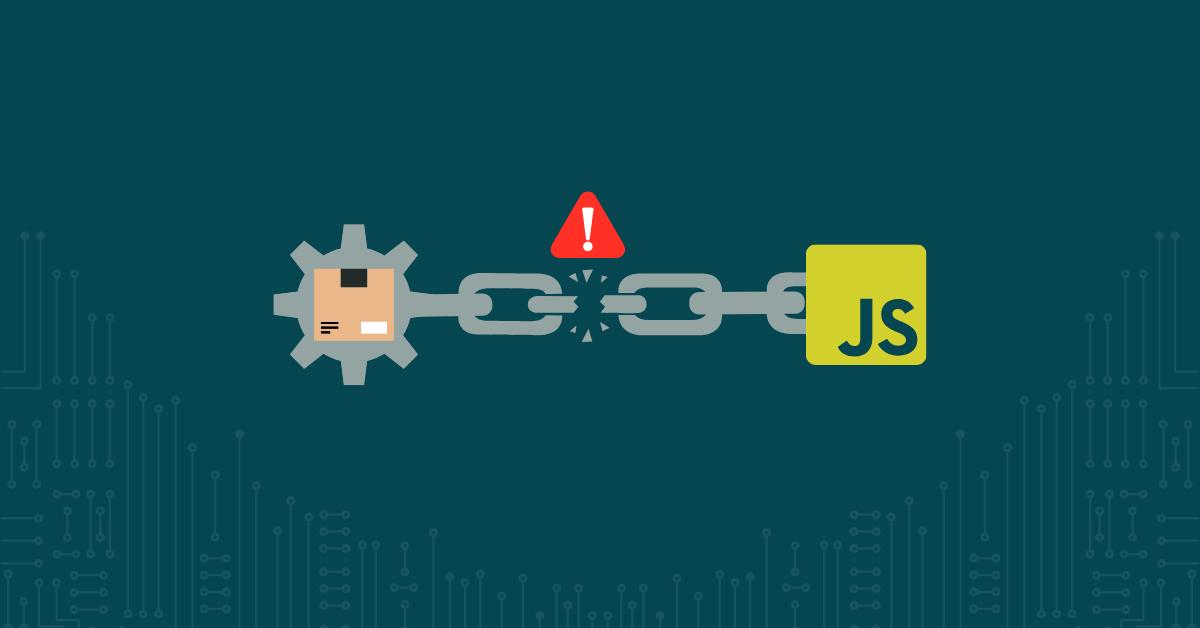
In March 2026, a brief yet consequential security incident exposed over 500,000 lines of internal source code from Anthropic’s AI system, Claude Code. The root cause was a misconfiguration in an npm package, and although the exposure lasted only a few hours, its implications extended far beyond a typical vulnerability disclosure.
While initial discussions centered on the security lapse, the real significance of the incident lies in what it revealed about the inner workings of modern AI systems. For the first time, developers and researchers were given an unfiltered view into how a production-scale AI agent is architected to function reliably in complex, real-world environments.
From Models to Systems: A Paradigm Shift in AI
One of the most important insights from the leak is the realization that modern AI systems are not defined solely by their underlying models. Although large language models receive the most attention, they represent only a single component within a much broader system.
Claude Code exemplifies a shift toward what can be described as agentic AI. In this paradigm, AI systems are no longer limited to generating responses; instead, they are capable of planning multi-step tasks, interacting with external tools such as APIs and file systems, maintaining long-term context, and adapting their behavior dynamically based on intermediate outcomes. This transformation signals a departure from simple prompt-response interactions toward systems that operate with a degree of autonomy and goal-oriented reasoning.
The Problem of Context Entropy
As AI systems evolve to handle longer and more complex workflows, they encounter a fundamental limitation known as context entropy. This phenomenon refers to the gradual degradation of coherence as the system accumulates more context over time.
In practical terms, context entropy manifests in several ways. Systems may begin to lose track of earlier instructions, produce outputs that contradict previous decisions, or generate hallucinated information that was never part of the original context. These issues become increasingly pronounced in autonomous workflows that involve dozens or even hundreds of sequential steps.
Without careful architectural design, the very mechanism that allows AI systems to maintain context can become a source of instability, ultimately undermining reliability and accuracy.
A Layered Approach to Memory Architecture
To address the challenges posed by context entropy, the architecture revealed in the leak employs a structured, multi-layered memory system. This design separates information based on its role and frequency of use, ensuring that the active working context remains efficient and manageable.
At the foundation of this system is a persistent index layer, represented by a file known as MEMORY.md. Rather than storing large volumes of raw data, this layer functions as a lightweight directory that contains references to relevant information stored elsewhere. By keeping only essential pointers in active context, the system avoids unnecessary token consumption while maintaining quick access to important knowledge. This approach ensures that the system remains both efficient and navigable, even as the underlying data grows in complexity.
Complementing this index layer is a set of topic-specific files that contain detailed information such as technical documentation, system configurations, and domain-specific knowledge. These files are not continuously loaded into the system’s working context. Instead, they are retrieved dynamically when required by a particular task. This selective loading mechanism allows the system to scale effectively, as it processes only the information that is directly relevant to the current operation.
The final layer consists of raw transcripts, which serve as a complete historical record of all interactions and system activities. This archival layer preserves every detail, ensuring that no information is permanently lost. However, rather than reintroducing entire histories into the working context, the system performs targeted retrieval, extracting only the segments that are pertinent to the current task. This design balances the need for comprehensive data retention with the practical constraints of performance and context management.
Reliability Through Operational Discipline
Another critical aspect of the system’s design is its emphasis on operational discipline, particularly through a principle known as strict write discipline. Under this approach, the system updates its memory only after confirming that an operation has been successfully completed.
This seemingly simple rule has profound implications for reliability. By ensuring that memory reflects only verified outcomes, the system avoids inconsistencies that might arise from failed or partially completed operations. This prevents the internal state from becoming corrupted and reduces the likelihood of errors propagating through subsequent steps.
A Philosophy of Verification Over Assumption
Closely related to this discipline is the system’s broader design philosophy, which prioritizes verification over assumption. Rather than treating stored information as inherently reliable, the system approaches it as a hypothesis that must be validated before use.
This means that before taking action, the system actively verifies the current state of its environment, confirms the accuracy of file contents, and cross-checks its assumptions against real-world data. This defensive approach significantly reduces the risk of cascading failures, particularly in dynamic environments where conditions may change over time.
Security Lessons from the Incident
Beyond its architectural insights, the incident also highlights important security considerations for modern software development. The exposure underscores the risks associated with automated dependency management, where updates can introduce vulnerabilities without sufficient oversight.
Even a short-lived exposure can have far-reaching consequences, particularly in interconnected systems where compromised components may propagate downstream. The incident serves as a reminder that secure development practices must extend beyond code to include the entire software supply chain.
Organizations can mitigate these risks by adopting strategies such as dependency version pinning, continuous security auditing, and regular credential rotation. These measures help ensure that vulnerabilities are identified and addressed before they can be exploited.
The Evolution Toward Autonomous AI Systems
Taken as a whole, the architecture revealed in the Claude Code leak reflects a broader shift in the field of artificial intelligence. The industry is moving away from reactive systems that simply respond to prompts and toward autonomous agents capable of executing complex, goal-driven tasks.
This transition introduces new challenges that extend beyond model performance. Issues such as memory management, system reliability, and context handling become central concerns, requiring careful engineering and thoughtful design.
Conclusion
The Claude Code leak was not merely a security incident; it was an unintentional disclosure of how modern AI systems are built to operate at scale. It demonstrated that the true complexity of AI lies not in the model alone, but in the systems that support and orchestrate it.
The most important lesson is clear. The future of artificial intelligence will be shaped less by the size of models and more by the sophistication of system architecture. Developers and organizations that invest in robust memory structures, verification mechanisms, and disciplined operational practices will be better equipped to build reliable, production-grade AI systems.