
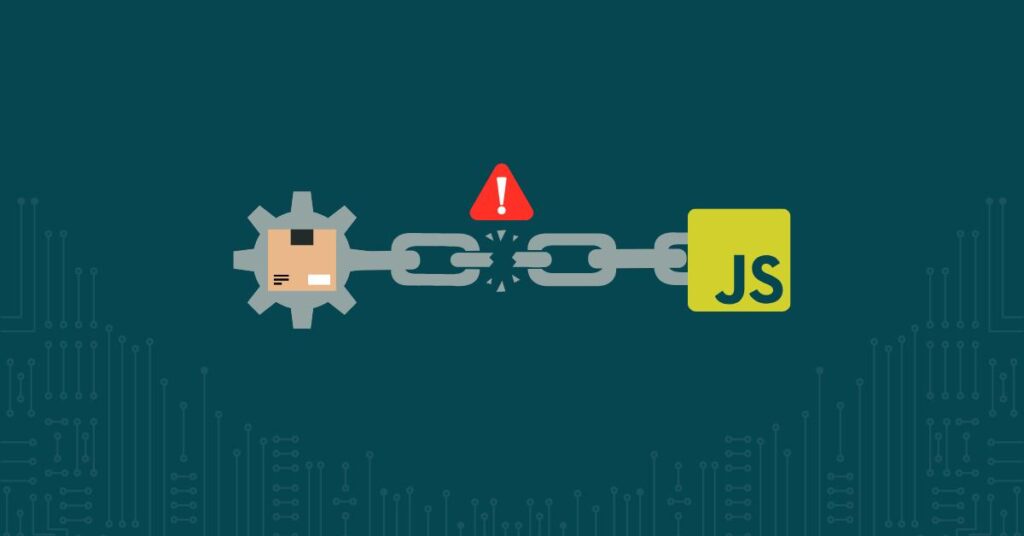
Modern web applications are built on layers of reusable components, frameworks, and third-party libraries that simplify development and accelerate delivery. Among these, one of the most widely used tools is Axios, a promise-based HTTP client that enables applications to communicate with backend services efficiently. Its simplicity and flexibility have made it a standard choice across frontend frameworks like React and Vue, as well as backend environments such as Node.js.
However, this widespread adoption also makes Axios a high-value target.
When a dependency that sits at the heart of application communication is compromised, the consequences extend far beyond a single system. It becomes a supply chain risk capable of affecting thousands of applications simultaneously.
What Happened in the Axios Breach?
The Axios breach is best understood not as a single isolated hack, but as part of a broader category of supply chain attack scenarios in the JavaScript ecosystem. In such scenarios, attackers do not directly target applications; instead, they attempt to compromise the libraries those applications depend on.
In the context of Axios, the risk emerges when malicious code is introduced through compromised package distributions, dependency injections, or manipulated versions of the library. Because Axios is responsible for handling HTTP requests and responses, any tampering at this level provides attackers with a powerful interception point. They can potentially observe, modify, or redirect data flowing between the client and server.
What makes this particularly dangerous is that such malicious behavior can remain hidden within normal application operations. Since Axios is expected to handle network communication, any abnormal activity may appear legitimate, allowing attackers to operate without immediate detection.
Who is Affected?
The impact of an Axios-related supply chain breach is not limited to a specific type of application. Any system that uses Axios, whether directly or as a transitive dependency, becomes part of the risk landscape. This includes web applications, backend APIs, mobile applications built with JavaScript frameworks, and even internal enterprise tools.
The risk becomes significantly higher in environments where dependencies are automatically installed or updated without strict verification. Organizations that rely heavily on open-source ecosystems without implementing proper monitoring or validation mechanisms are particularly vulnerable. In such cases, even a single compromised package can cascade through multiple systems and environments.
Why This Breach Matters
The significance of the Axios breach lies in what it reveals about modern software development practices. Today’s applications are no longer built from scratch; they are assembled from numerous interconnected components. While this approach increases efficiency, it also introduces hidden dependencies that may not be fully understood or controlled.
This creates a critical security challenge.
Developers may write secure code, implement strong authentication, and follow best practices, yet still remain vulnerable because of a compromised dependency. The Axios scenario highlights how attackers can exploit trust in widely used libraries to gain access to sensitive data and system functionality.
It shifts the focus of security from just protecting your code to protecting your entire dependency ecosystem.
What Makes Supply Chain Attacks Dangerous?
Supply chain attacks differ fundamentally from traditional attacks because they exploit trust rather than technical vulnerabilities. Instead of breaking into a system, attackers insert themselves into the software supply chain, allowing their code to be executed as part of normal operations.
In the case of Axios, this means that malicious logic could run every time an API request is made. Since these requests often involve authentication tokens, session identifiers, and sensitive user data, the attacker gains access to critical information without needing to bypass security controls directly.
This makes detection extremely difficult. The malicious activity blends into legitimate traffic, and traditional security mechanisms may not recognize it as a threat. As a result, organizations may continue to operate under the assumption that their systems are secure while data is being silently exposed.
Core Security Concerns
One of the primary concerns in an Axios-related breach is the exposure of sensitive data. Since Axios handles API communication, it often carries authentication tokens, user credentials, and other confidential information. If compromised, this data can be intercepted and transmitted to unauthorized parties without raising immediate alarms.
Another major issue is the potential manipulation of requests and responses. Attackers could alter outgoing requests, inject malicious payloads, or modify server responses to influence application behavior. This can lead to unauthorized actions, data corruption, or exploitation of backend vulnerabilities.
There is also the critical problem of backend trust. Many systems assume that requests originating from the application are valid and enforce minimal validation. If an attacker can replicate or manipulate Axios requests, they can bypass frontend controls entirely and interact directly with backend services.
How to Prevent Axios Supply Chain Risks
Mitigating these risks requires a proactive approach that extends beyond traditional application security. Organizations must implement strict dependency management practices, ensuring that all packages are sourced from trusted repositories and regularly updated to address known vulnerabilities. Locking dependency versions and avoiding automatic updates without review can help prevent unexpected changes from entering the system.
Server-side validation must always be enforced, regardless of how secure the client-side implementation appears. The backend should never assume that requests are trustworthy simply because they originate from a known library. Every request must be validated, authenticated, and authorized independently.
Secure communication practices are equally important. While HTTPS provides a baseline level of protection, additional measures such as proper certificate validation and protection against interception attacks should be implemented. Monitoring application behavior and logging unusual activity can also help detect anomalies that may indicate a compromised dependency.
Finally, the use of software composition analysis tools can provide visibility into the dependency ecosystem, helping organizations identify vulnerabilities and potential risks before they are exploited.
Final Thoughts
The Axios JavaScript breach serves as a powerful reminder that modern applications are only as secure as the components they depend on. In a world where open-source libraries form the foundation of software development, trust must be continuously verified rather than assumed.
This incident highlights the need for a broader security perspective — one that includes not just application code, but the entire supply chain that supports it.
For developers, it emphasizes the importance of understanding and managing dependencies carefully. For security professionals, it reinforces the need for continuous monitoring and validation of all components within the system.
Lorem ipsum dolor sit amet, consectetur adipiscing elit. Ut elit tellus, luctus nec ullamcorper mattis, pulvinar dapibus leo.